
Italy is an amazing country with so many beautiful places to discover. However, one destination that impressed me more than almost any other was Venice. I had already heard so much about the city and had seen its famous canals, gondolas, and historic buildings countless times in movies and pictures. But actually seeing Venice for myself was something completely different. Even with all those expectations, the city still managed to amaze me.
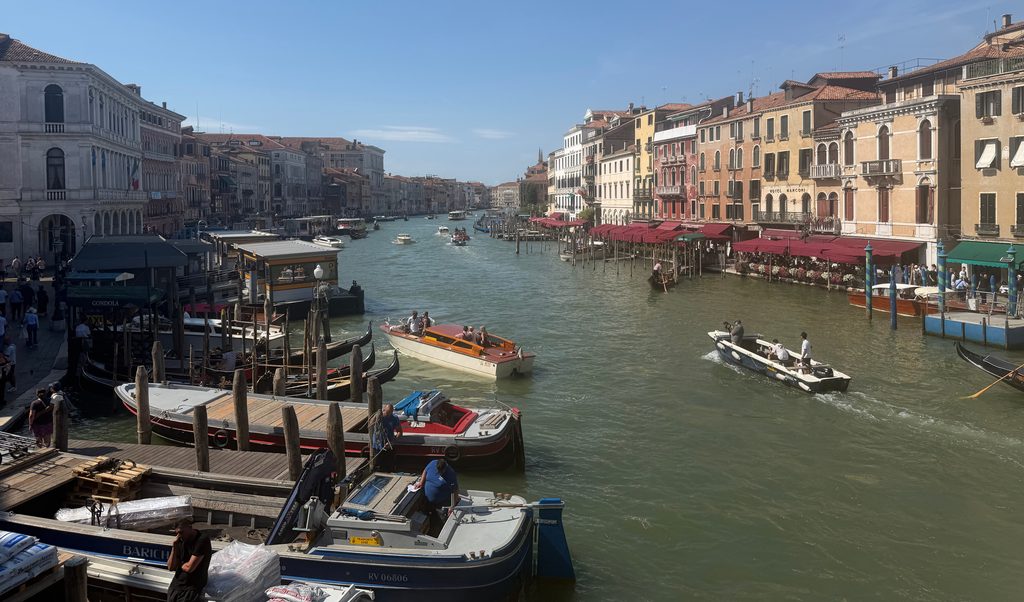
Our adventure started with a water bus ride along the Grand Canal, which turned out to be the perfect introduction to Venice. The canal is lined with gorgeous historic buildings, each one different from the next and each with its own unique character and charm. One of the most fascinating things was seeing how the water comes right up to the buildings, with some front doors opening directly onto the canal. It immediately makes you realize just how different Venice is from almost anywhere else in the world.
Adding even more charm to the Grand Canal are all the different Venetian boats constantly making their way across the water. Along with the water buses, there are sleek water taxis, small working boats, and, of course, Venice’s famous gondolas. The canal is certainly busy, but somehow it never seems to take away from the beauty of the surroundings. Instead, all the different boats become part of the scenery and make the views even more picturesque.
Our first stop was the Rialto Bridge, the oldest and most famous stone bridge crossing the Grand Canal. The bridge was designed by Antonio da Ponte after he won a competition to design the new crossing. Seeing the Rialto Bridge in person was incredible. It is worth exploring from both sides, as well as walking through the center, where small shops and merchants line the bridge. From the top, you also get some wonderful views of the Grand Canal and all the activity happening below.
From there, we walked along the canal for a while before wandering into Venice’s maze of smaller streets and alleys. Getting a little lost in Venice is almost part of the experience because you never quite know what beautiful square, tiny bridge, hidden canal, or historic building might be waiting around the next corner.
We then met up with a local guide who gave us a private tour through several areas of Venice, something we can strongly recommend. Having a local guide made the city’s incredible history come alive and helped us notice details that we probably would have walked right past on our own.
During our tour, we visited several of Venice’s famous churches. Among them was the Church of San Salvador, an impressive Renaissance-style church dating back to the 16th century, and the Church of Santo Stefano, a beautiful Gothic church known for its distinctive ship-keel-shaped roof. Of course, one of the highlights was Saint Mark’s Basilica, with its spectacular golden interior and its long connection to Saint Mark, the patron saint of Venice.
Our guide also taught us about the Venetian merchants who helped transform Venice into one of the most powerful maritime and trading centers in the world. We learned about the city’s historic water systems and old Venetian traditions, as well as what life was like during the devastating outbreaks of the Black Death and how Venetians tried to protect themselves.
Eventually, we arrived at the famous Saint Mark’s Square, the heart of Venice and one of the city’s most spectacular sights. Standing in the square, you are surrounded by some of Venice’s most recognizable landmarks.
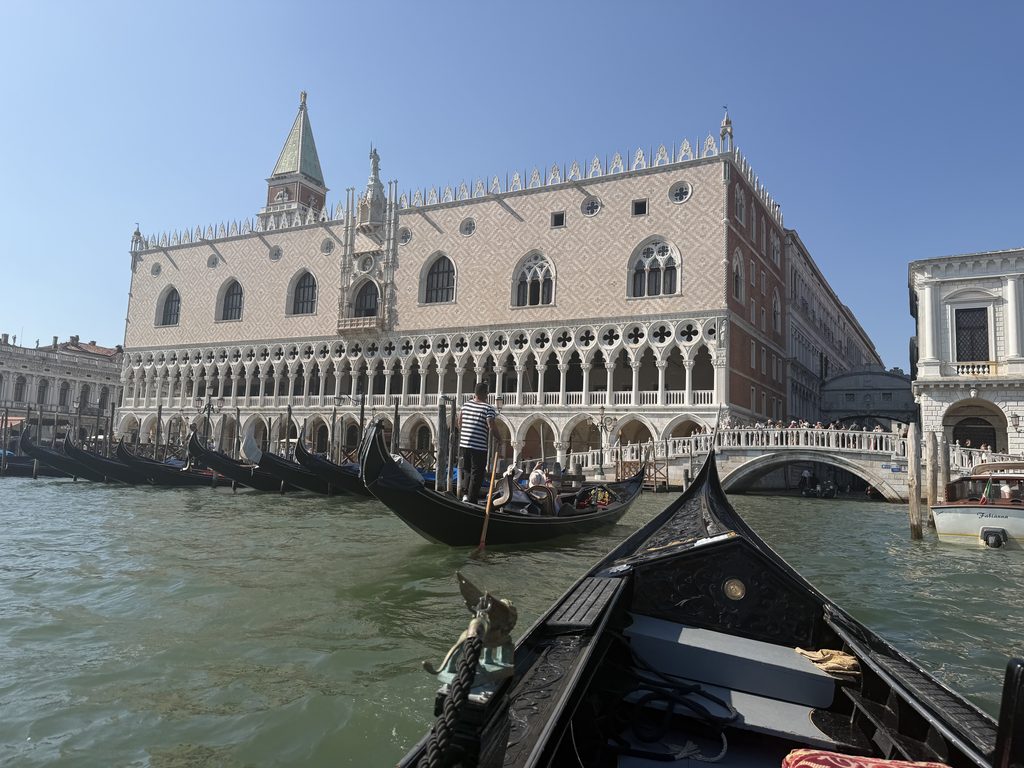
One of them is the Doge’s Palace, a magnificent Venetian Gothic building that once served as the center of government for the Venetian Republic and the residence of the Doge. Nearby stands Saint Mark’s Basilica, along with the Campanile, the famous bell tower that was reconstructed after the original tower collapsed in 1902. There is also the beautiful Clock Tower, which has stood over the square for more than 500 years. Its striking blue-and-gold astronomical clock displays not only the time but also astronomical information, including the zodiac.
Saint Mark’s Square is also home to Caffè Florian, an elegant and historic coffeehouse that first opened in 1720. If you have some extra time, stopping here for a coffee or a slice of cake is a wonderful way to soak up the atmosphere. Sitting in such a historic café while looking out over Saint Mark’s Square makes it easy to imagine what Venice might have felt like centuries ago.
Our guide continued Venice’s story by explaining the turbulent period when the city changed hands between European powers. We heard about Napoleon’s conquest of Venice and the end of the Venetian Republic, the periods of Austrian control that followed, and Venice’s eventual incorporation into the Kingdom of Italy in 1866. With so much history packed into one relatively small city, it sometimes feels as though every building and square has a story to tell.
We also learned about current life and traditions in Venice, including the gondolier, the person who steers the gondola and one of the oldest and most iconic professions in the city. The gondolas themselves are all handmade using traditional techniques, and becoming a gondolier requires special training and a deep knowledge of Venice and its canals. Traditionally, the profession has been passed down through Venetian families from one generation to the next, helping preserve a tradition that has been part of Venice for centuries.
We finished our tour with a 30-minute gondola ride. It was both beautiful and romantic, and it gave us some additional views of the city. We glided through narrow canals, passed historic buildings, and discovered hidden passages that would have been easy to miss while exploring on foot.
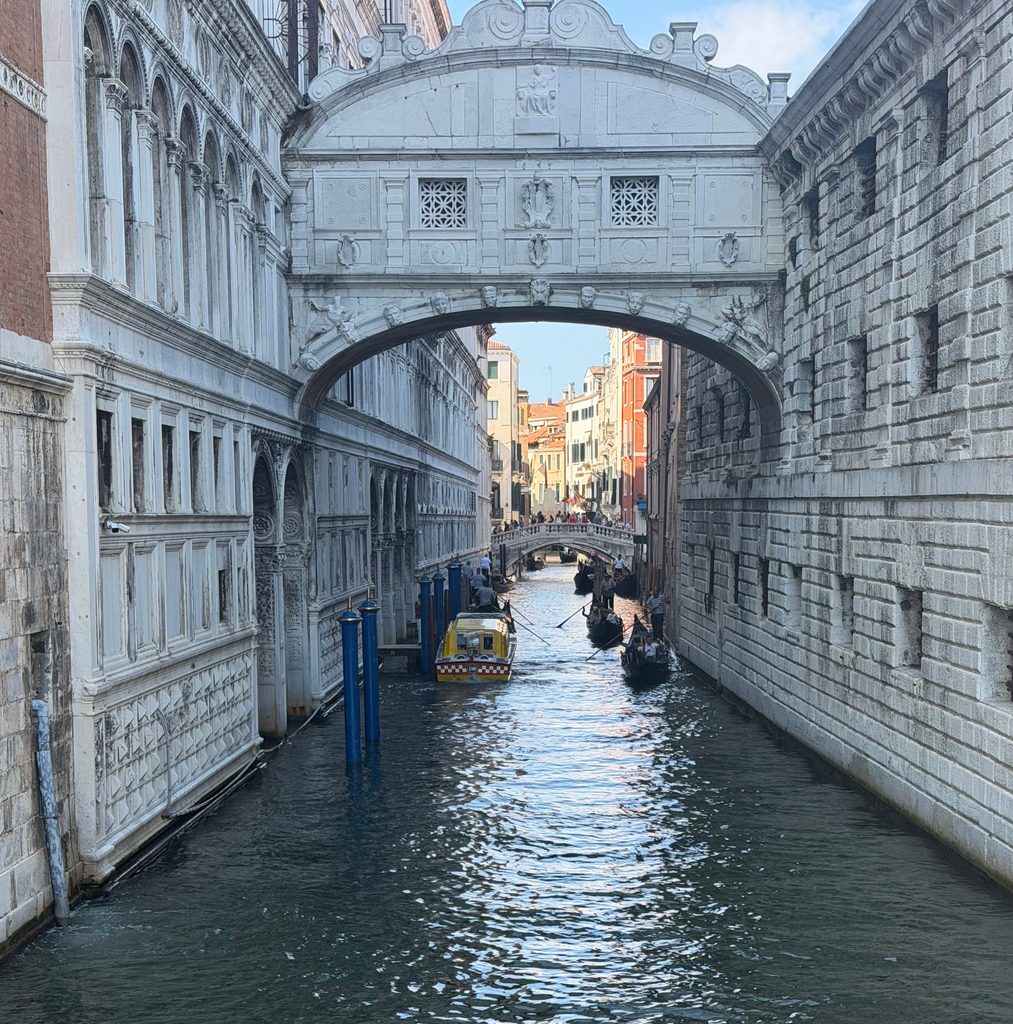
Along the way, we also saw the famous Bridge of Sighs, an enclosed Baroque bridge connecting the Doge’s Palace with the historic prison. According to tradition, the bridge got its name from the idea that prisoners would sigh as they caught their final glimpse of Venice through its small windows before entering the prison. Whether the story is completely accurate or not, it certainly adds to the mysterious atmosphere surrounding the bridge.
The following day, we decided to explore beyond central Venice and took a water bus for the approximately 45-minute journey to Burano, a small island in the northern Venetian Lagoon.
Burano is a historic fishing village best known for its wonderfully colorful houses. One popular story says that fishermen began painting their homes in bright colors so they could recognize them when returning through the lagoon’s thick fog. Whether legend or history, the tradition has created one of the most cheerful and photogenic places we visited in Italy.
The moment we arrived and started walking around, we fell in love with Burano’s charm. Rows of brightly colored houses sit alongside narrow canals winding through the village, with little bridges connecting one side to the other. Every street seems to offer another perfect picture.
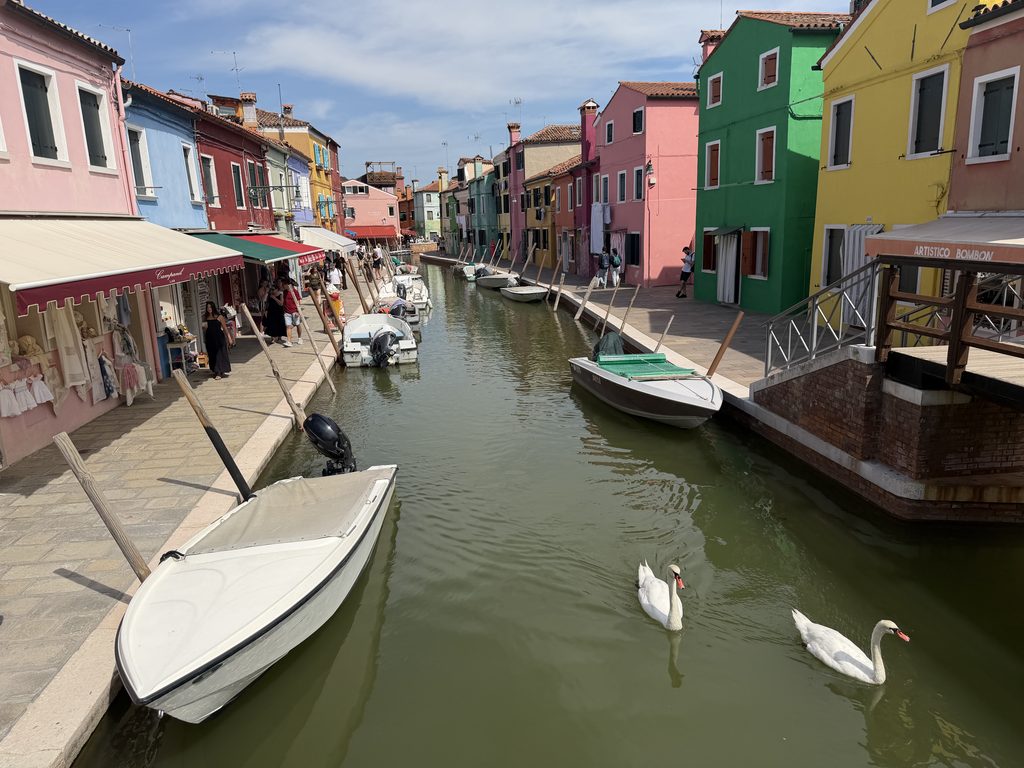
In addition to its fishing heritage, Burano is famous for its intricate handmade lace. Small shops throughout the island sell traditional lacework along with other locally made crafts and souvenirs. There are also plenty of charming restaurants where you can sit inside or outside and enjoy the relaxed atmosphere of the island.
Burano was definitely worth the trip, and we thoroughly enjoyed spending part of the day there. It offered a completely different atmosphere from central Venice while still feeling unmistakably Venetian.
That afternoon, after returning to Venice, we spent some time doing some lighter sightseeing and shopping. Venice has a surprisingly diverse shopping scene, ranging from high-end designer stores to small shops selling locally made crafts, artwork, glass, masks, and other Venetian specialties. Wandering through the shopping streets was another fun way to explore the city without having a strict itinerary.
In the evening, we returned to the Jewish Ghetto in Venice’s Cannaregio district, where our hotel was located. The area is well worth exploring in its own right. It is historically significant and has a very different atmosphere from the busiest tourist areas of Venice. Because of the limited space historically available to the Jewish community, the neighborhood is also home to some unusually tall buildings for Venice. Today, the surrounding Cannaregio area is lively, with plenty of shops, cafés, and restaurants.
For our final dinner, we found a spot right along the canal near our hotel. Sitting beside the water as the sun went down was the perfect ending to our time in Venice. After days of exploring canals, bridges, churches, colorful islands, hidden alleys, and centuries of history, we could simply sit back and enjoy the atmosphere. It is one of those travel moments that we will always remember.
The following day, unfortunately, it was time to head to the airport. At first, we were not sure about the best way to get there, but after doing a little research, we discovered that there was a water bus that could take us directly toward Marco Polo Airport for around $18 per person.
It seemed only fitting that our final journey through Venice would also be by boat. After our luggage was safely stored onboard, we settled in for one last ride across the lagoon.
As we rode away, we got to enjoy one final view of Venice from the water. It was a great way to end our trip, and even though we were sad to leave, we were so happy with everything we had gotten to see and experience. Venice is such a unique and beautiful city, and we will definitely always remember our time there.